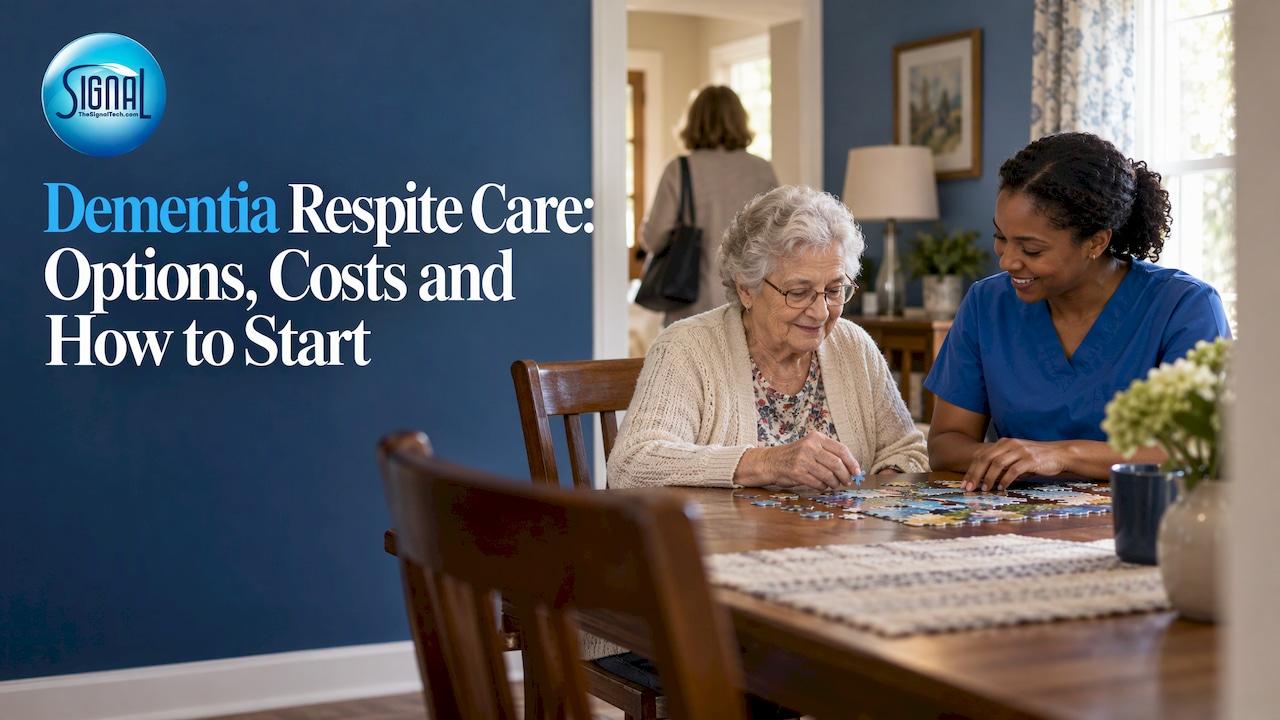
Dementia respite care is a planned break for the person who looks after someone with dementia, while a trained person takes over the care. The most practical place to start is usually at home, with a caregiver coming to the house so your loved one stays in familiar surroundings and you get real time off. Hahn March's Signal Health Group Franchise network provides personal care, home health and hospice services for seniors, veterans, people with disabilities and low-income families, and in-home help of this kind is often where families begin.
This guide covers what respite care is, the main types, how to choose and prepare, and what it can cost and who may help pay.
TL;DR
- Respite care is short-term relief for a family caregiver. It can last a few hours, days or weeks, and it can happen at home, at an adult day center or in a care community.
- The WHO's evidence review says home-based respite may be encouraged where feasible for carers of people with dementia, and it found no evidence of harm.
- Try a provider before you need one. A trial visit on an ordinary day makes an emergency much easier.
- Most private health insurance does not cover respite. Medicare covers hospice respite stays, and Medicaid or your local Area Agency on Aging may help with other costs.
- Guilt is the most common reason families wait. Respite benefits the person with dementia as well as the caregiver.
Table of Contents
- What dementia respite care is
- The main types of respite care
- Signs it is time to arrange respite
- How to choose and prepare for respite care
- What dementia respite care costs and who may help pay
- Where our services fit
- Making respite part of the routine
- FAQ
- Sources
What dementia respite care is
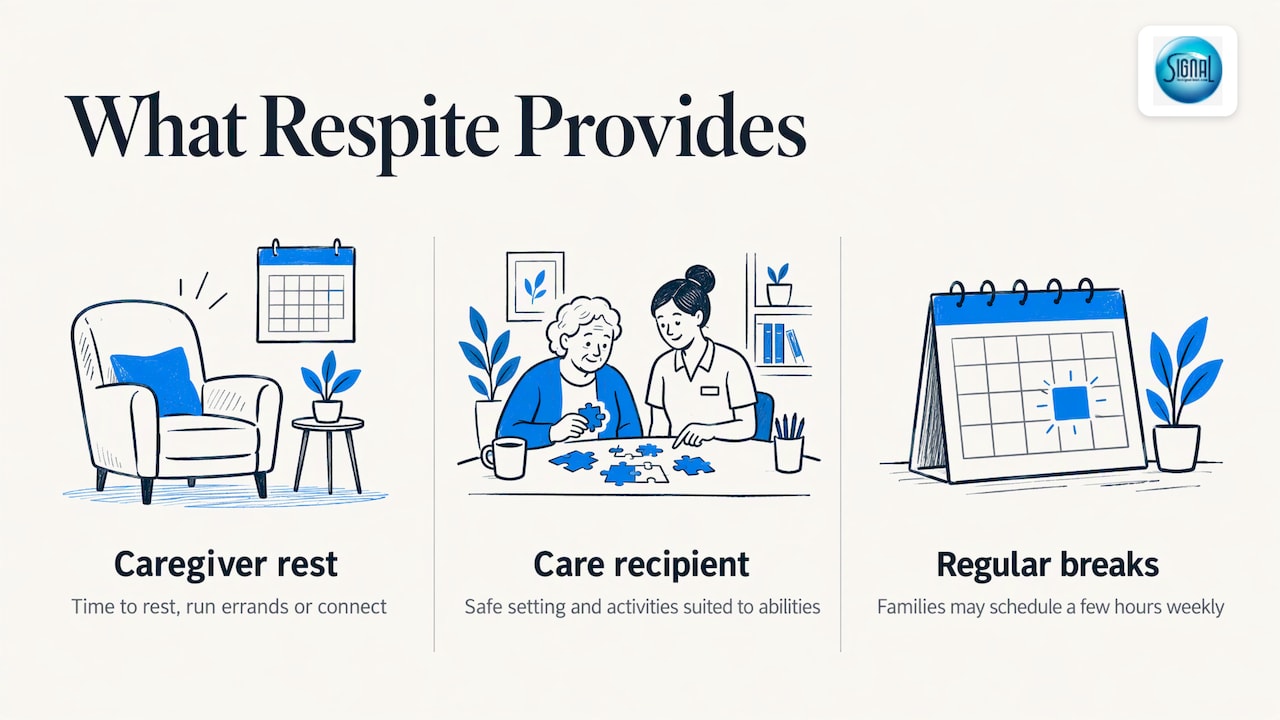
The Alzheimer's Association describes respite care as temporary rest for the caregiver while the person with Alzheimer's keeps getting care in a safe setting. The caregiver can rest, run errands or spend time with other people. The person with dementia gets time with others, a supportive environment and activities that fit their abilities.
The WHO's review of respite for dementia carers defines it as temporary care, at home or in an institution, from someone other than the main caregiver. Its recommendation is that home-based respite may be encouraged for carers of people with dementia where feasible, and it notes no evidence of harm.
Respite is not only for crises. The Alzheimer's Association says it can also be arranged ahead of time for emergencies, unplanned situations or unexpected trips. Many families use it on a regular schedule, such as a few hours every week, so that the break is something to count on rather than a last resort.
The main types of respite care
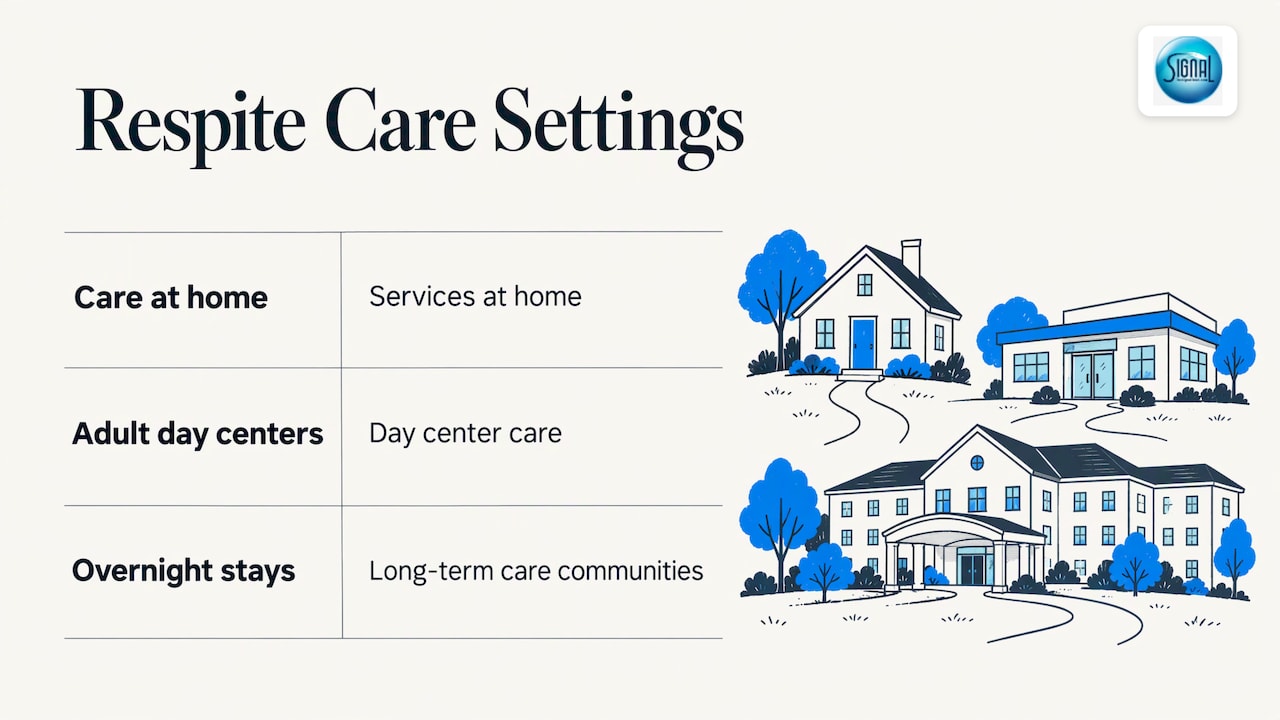
The Alzheimer's Association groups respite into services at home, adult day centers and overnight stays in long-term care communities. Each suits a different situation.
In-home respite
A caregiver comes to your house. The Alzheimer's Association lists several levels: companion services, personal care or home health aide services, homemaker services and skilled care. A companion keeps your loved one company and engaged. A personal care aide also helps with bathing, dressing and toileting. Skilled care involves a nurse for medical needs.
For many families with a person in the middle or later stages of dementia, home is the easiest setting. There is no transportation to arrange, no new building to learn, and the daily routine stays mostly intact. You can also stay in the house, resting in another room, while someone else handles the tasks, or you can leave entirely for a few hours.
This is the area where our network works. Personal care, home health and hospice are the services we deliver through franchise locations, and they are designed around seniors, veterans, people with disabilities and low-income families, with attention to independence and quality of life.
Adult day centers
According to the Alzheimer's Association, adult day centers offer a safe environment with staff-led activities such as music and art, and they often provide meals and transportation. Its 'Time to Breathe' material adds that these programs usually run during business hours and may be located in senior centers, nursing facilities, churches, hospitals or schools. Some help with medication monitoring or bathing.
Day programs work well if you work during the day or want a predictable weekday break, and if your loved one enjoys group settings.
Overnight stays in a care community
Some long-term care communities offer short stays of a few days or weeks. The same Alzheimer's Association material says these stays are usually at least 5 days and more often 2 weeks, and are usually private-pay or grant-funded. They fit best when you need a longer stretch, for a surgery of your own, a family event or a trip.
Choosing between them
A 2014 Cochrane review of respite for people with dementia points out that respite may be planned or unplanned, overnight or daytime only. It also says that ideally the person and the caregiver can choose the type that suits them, but often only one type is available in a given area. So find out early what exists near you.
| Type | Typical length | Best when | Usual funding |
|---|---|---|---|
| In-home | A few hours to overnight, regular or occasional | Your loved one is calmer at home, or has trouble with transitions | Private pay, some veterans' and Medicaid programs, hospice benefit in some cases |
| Adult day center | Business hours | You need weekday time and your loved one enjoys company | Private pay, sliding scale, some grants |
| Overnight stay | Usually 5 days to 2 weeks | You need a longer break or have a planned absence | Usually private pay or grant-funded |
Signs it is time to arrange respite
Most caregivers wait too long. The Alzheimer's Association's 'Time to Breathe' resource lists signs of caregiver burnout:
- Frequent tears or feeling helpless
- Overreacting to minor nuisances
- Constant exhaustion
- Withdrawing from friends and social contacts
- Increasing use of alcohol or stimulants
- Changes in eating or sleeping
- Being short-tempered with the person you care for
If several of these sound familiar, that is a reason to arrange a break now. The Alzheimer's Association's family care guide offers five coping tips, and one of them is to take a break through respite care. Its other tips: note your stress symptoms and discuss them with a doctor, be realistic about behaviors you cannot control, know that you are doing your best, and accept changes as the disease progresses.
If you notice persistent low mood, heavy drinking or sleep that will not recover, talk with your own doctor. Your health matters to your loved one's care.
A practical way to begin, suggested in the same 'Time to Breathe' material: pick the two most stressful parts of your week, such as bathing, nights or getting out of the house, and look for help with exactly those. Support groups, adult day programs and home care services are all options it lists.
How to choose and prepare for respite care
The Alzheimer's Association's family care guide gives a clear order of work. Here it is as steps, with what to watch for at each one.
- List current needs. Write down what your loved one needs help with now: bathing, meals, medication reminders, mobility, wandering risk, behavior at certain times of day. Needs change as dementia progresses, so update the list. Where possible, involve the person in the decision, since the guide recommends including them in care choices whenever possible.
- Decide the type and the schedule. Match the list to the table above. If afternoons are hardest, a three-hour afternoon visit may help more than a full day once a month.
- Screen providers by phone, then in person. The guide suggests considering safety, health, the amount and type of care, and social engagement. Ask about training, qualifications and certifications. For anyone you hire independently, interview them and check references.
- Use a written checklist. The guide points to a nine-step provider checklist that includes background checks, references and a written contract. Put expectations on paper: hours, tasks, what happens in an emergency, who is called first.
- Try it in a non-emergency. The Alzheimer's Association advises trying respite providers when nothing is wrong. Start with a short first visit while you are nearby, then lengthen it.
- Prepare a handover sheet. Keep your medical team's contact information and a current medication list, with dose and frequency, easy to reach at all times. Add daily routines: favorite foods, what soothes, what causes agitation, how your loved one signals pain or the need for the bathroom.
- Plan for emergencies. Talk with trusted people about who can step in at short notice, so you are not starting from zero on a bad day.
When the person is in a home setting with an aide, small details help the visit go well: photos on the fridge showing who is who, familiar music, a notice of the schedule. Introduce the new person as a helper who is visiting, in words your loved one will accept. Expect a settling-in period of a few visits.
Easing the guilt
The Alzheimer's Association names guilt and anxiety among the common barriers, along with cost, lack of access to providers and lack of transportation. Its answer is that respite benefits both people. You come back more patient, and your loved one has a chance for company and activity beyond the one person they depend on. A break is part of keeping the care sustainable over years.
What dementia respite care costs and who may help pay
Costs depend on the type of care and where you live. The National Institute on Aging says respite from a friend, relative or volunteer may cost nothing, while professionals charge by the hour or by the day or week. It also says most private health insurance plans do not cover respite.
Programs that may help:
- Medicare. The NIA says Medicare covers most of the cost of up to five consecutive days of hospice respite care in a hospital or skilled nursing facility. This applies when the person is receiving hospice care. Medicare does not generally pay for long-term custodial care or most personal care such as help with dressing or bathing, as the Alabama Area Agency on Aging's 2025 dementia guide explains.
- Medicaid. It may provide payment assistance, and the same guide says it may help pay for long-term care, home care and support services for people with low income and few assets. Rules differ by state, so ask your state Medicaid office or Area Agency on Aging what applies to you.
- Local help. The Alzheimer's Association suggests asking about scholarships, sliding-scale fees and government programs through your local chapter. Its 'Time to Breathe' material also says you can call your local Aging and Disability Resource Center or Area Agency on Aging to inquire.
A useful habit before any call: write down your loved one's coverage, any veterans' benefits, and the monthly hours of help you would like. That makes it faster for an agency to tell you what is available.
Where our services fit
If you are looking for help in your loved one's own home, our network offers personal care, home health and hospice services through franchise locations across the country. The network was established in 2012 and is built around seniors, veterans, people with disabilities and low-income families, particularly in underserved communities. For veterans, the VETS2INDUSTRY initiative supports the move to civilian life.

To learn what is offered near you, start at the Hahn March site for personal care, home health and hospice. Bring your needs list and handover sheet from the steps above, so the conversation can be specific from the first call.
Making respite part of the routine
The families who manage dementia care longest tend to treat respite as a standing appointment. A few ways to keep it going:
- Schedule it like a medical visit. Put the same time on the calendar each week. Predictability helps your loved one too.
- Use the time for something that restores you. Sleep, a walk, a meal with a friend, a doctor's appointment of your own. Unfocused time off is still valid.
- Review every few months. Dementia changes. A companion visit that worked in the early stage may need to become personal care help later.
- Share the plan. Tell relatives and your loved one's doctor what you have arranged, so everyone knows who is covering which hours.
- Think about hospice early if it applies. If your loved one is on hospice, the Medicare respite benefit above can give you up to five consecutive days of relief. Our hospice services are one place to ask about this.
FAQ
Is respite care only for people in the late stages of dementia?
No. Respite can be useful at any stage, because it is about the caregiver's need for a break. Early on, a companion visit may be enough. Later, personal care help with bathing and toileting often matters more.
How often should a caregiver use respite care?
There is no single schedule. The Alzheimer's Association says respite can be a few hours, days or weeks. Many caregivers start with a few hours a week and add more as needs grow. Pick the two most stressful parts of your week and arrange help for those first.
Does Medicare pay for dementia respite care?
Only in specific cases. The NIA says Medicare covers most of the cost of up to five consecutive days of hospice respite in a hospital or skilled nursing facility. Other respite is usually paid privately, though Medicaid and local programs may help depending on your state and income.
What if my loved one refuses help from a stranger?
Start small. Try a short visit while you are in the house, introduce the helper gently, and lengthen the time as trust builds. The Alzheimer's Association advises trying a provider in a non-emergency situation first, so the first meeting is not under pressure.
Who can I call to find respite options near me?
Your local Area Agency on Aging or Aging and Disability Resource Center can tell you what is available in your area, and your local Alzheimer's Association chapter can discuss funding such as scholarships. For in-home personal care, home health or hospice, you can also contact us through hahnmarch.org.
Sources
- Respite Care, Alzheimer's Association
- Q10: For carers of people with dementia, does respite care help? World Health Organization
- Time to Breathe, Alzheimer's Association
- Family Care guide, Alzheimer's Association
- Respite care for people with dementia and their carers, Cochrane review (2014)
- What Is Respite Care? National Institute on Aging
- Dementia Resource Guide 2025, Alabama Area Agency on Aging