
Caring for an older adult at home works best when you build a plan before a crisis forces one. That means noticing the early signs, talking with your loved one about what they want, writing down their health details, making the house safer and deciding which tasks family can handle and which need trained help. Hahn March founded Signal Health Group Franchise to bring personal care, home health and hospice to seniors, veterans, people with disabilities and low-income families, so this guide is written for families in exactly that position.
TL;DR
- Watch for patterns, not single bad days: missed medicines, weight loss, unsafe cooking, falls, isolation and confusion are the warning signs the National Institute on Aging lists.
- Start the conversation early, ask your loved one what they want, and keep their wishes at the center of the plan.
- Write a care plan with conditions, medicines, doctors and emergency contacts, and update it at least once a year.
- Share the work. Personal care, skilled home health and respite are different services, and most families end up needing a mix.
- Do not assume Medicare covers long-term care. Call your local aging office early to learn what help exists in your area.
Table of Contents
- Signs an older adult needs help at home
- How to start the conversation
- Build a written care plan
- Make the home safer
- What kinds of in-home care exist
- Where Hahn March fits in
- Sharing the work and handling the stress
- Paying for care at home
- Finding help near you
- FAQ
- Sources
Signs an older adult needs help at home
Most families do not decide one day that Mom needs help. They notice small things that add up. The National Institute on Aging (NIA) lists several warning signs worth taking seriously:
- Unsafe meal preparation, or food that is spoiled or missing from the kitchen
- Poor hygiene, or clothes that do not fit the weather
- Clutter building up around the house
- Missed medicines
- Weight changes
- Confusion, memory or judgment problems that cause real consequences
- Falls or trouble moving around
- Withdrawal and isolation
One of these does not mean a crisis. A cluster of them, or one that keeps repeating, means it is time to act. Visit at different times of day if you can. A parent who looks fine at Sunday lunch may be skipping dinner and pills the rest of the week.
If you want a longer checklist written for families, we cover it in our guide to signs an elderly person needs in-home care.
What to look at when you visit
Walk through the home with fresh eyes. Check the refrigerator, the pill organizer, the mail pile, the bathroom and the stairs. Notice whether your parent gets up from a chair easily and whether they seem sad or anxious. Write down what you see with dates, because specific notes make the conversation with a parent and with a doctor much easier.

How to start the conversation
Most older adults want to stay in their own homes, and many hear "you need help" as "you are losing your independence." The NIA's advice is to ask the person directly, raise specific observations without criticizing, and offer practical options that fit their wishes. If health is a concern, suggest a visit to a health professional.
In practice, that sounds like this:
- Say what you saw, not what you fear. "I noticed the pill box was full on Thursday" works better than "You can't manage your medicines."
- Ask before you tell. "What is the hardest part of your day right now?" gives your parent the lead.
- Offer small first steps. A few hours of help with bathing or meals feels very different from a major change.
- Plan before you need it. The NIA's aging-in-place guidance recommends talking about current and future support and costs before extensive help is needed, and revisiting the plan as circumstances change.
Expect more than one conversation. A first "no" is often a request for more time, not a final answer.
Build a written care plan
A care plan is a shared document that keeps everything in one place. The CDC's care plan guidance says it should record:
- Health conditions
- Medicines and doses
- Doctors and other providers
- Insurance information
- Emergency contacts
The CDC recommends updating it yearly or after any change in health or medicines. It also notes that a written plan helps you prioritize, keeps information together and supports consistent care when caregivers change, for example when a sibling takes over from you for a week. Wherever possible, involve your loved one in making it.
Get the paperwork in order
Privacy rules can stop you cold at the doctor's office. The NIA's getting started guide says you generally need written permission to receive another adult's medical information, unless that adult is present and able to consent. Ask your parent to sign the permission forms with their doctors while they can easily do so, and keep copies with the care plan.
Make the home safer
Falls and kitchen accidents are among the most preventable problems. The NIA recommends inspecting the home room by room, fixing immediate hazards such as loose stair railings and poor lighting first, and repeating the review as needs change.
A practical order of work:
- Entrances and stairs. Secure railings, clear steps, add light at every landing.
- Bathroom. This is where help with bathing and toileting is most often needed, so look at the tub, floor and grab-bar situation.
- Bedroom and hallways. Clear cords, loose rugs and clutter from the paths your parent walks at night.
- Kitchen. Make sure food is fresh, the stove is used safely and the most-used items are within easy reach.
- Emergency contacts. Post key numbers where they are easy to see and make sure your parent can reach a phone from every room.
If repairs are beyond the family budget, the NIA points families toward state housing finance agencies, social service agencies, community development groups and federal resources. It lists the Administration for Community Living at 202-401-4634 for more information.
What kinds of in-home care exist
Families often use one word, "care," for several different services. Knowing the difference helps you ask for the right thing.
Personal care and household help
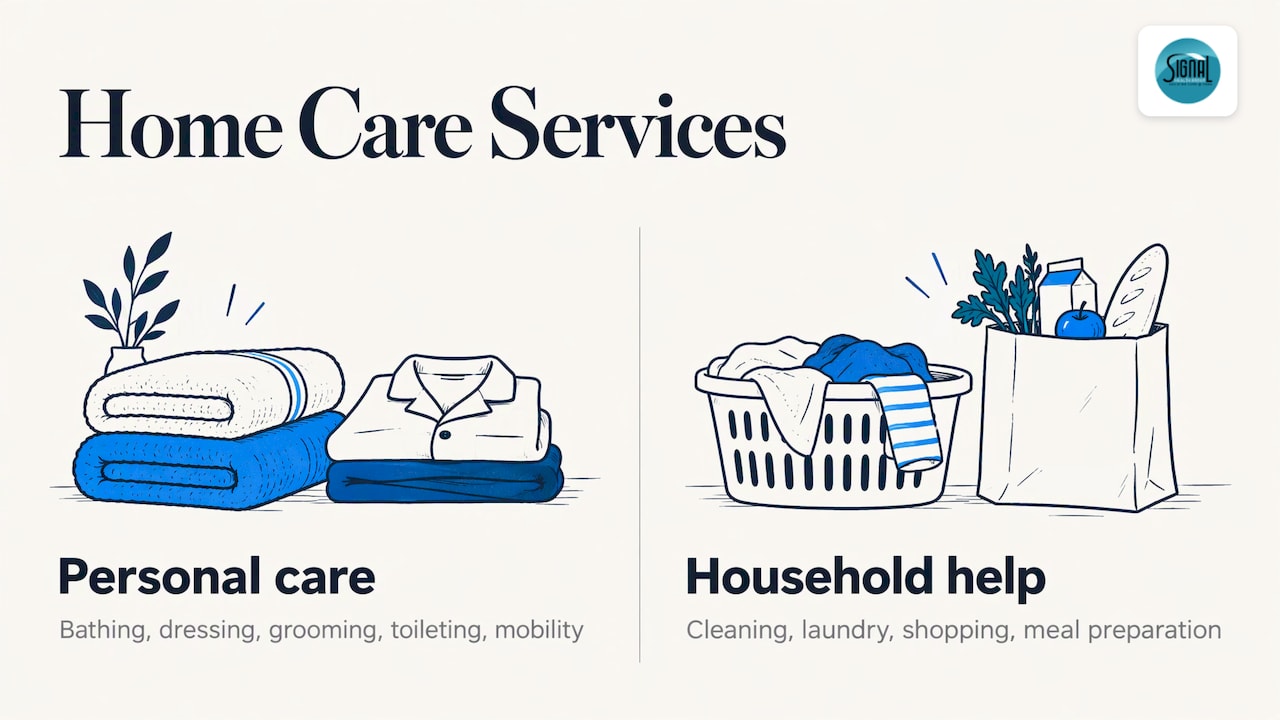
The NIA says personal care can cover bathing, dressing, grooming, toileting, eating and moving around, while household support can include cleaning, laundry, shopping and meal preparation. This is the help that most often lets someone remain independent at home. Our personal care service is built around these everyday needs.
Skilled home health
The NIA's long-term care guidance separates informal help from family and neighbors from professional services. Nurses, aides and therapists can provide health-related care such as wound care, help with medical equipment and physical therapy. This is the right category after a hospital stay, with a new diagnosis or when medical tasks go beyond what a family member can safely do.
Respite care
Respite is temporary care that gives an unpaid family caregiver a break. A University of Pittsburgh Institute of Politics report defines it as planned or emergency relief, with formal examples such as adult day centers and sitter-companion services and informal examples such as family, friends, neighbors and volunteers. If your parent has dementia, see our guide to dementia respite care options, costs and how to start.
Hospice
Hospice is comfort-focused care for people near the end of life, and it can be delivered at home. If you are weighing it, our article on what Medicare hospice coverage pays for explains how it is paid.
| Type of help | Typical tasks | Who it suits |
|---|---|---|
| Personal care | Bathing, dressing, toileting, meals, mobility | Someone who needs daily hands-on help |
| Household support | Cleaning, laundry, shopping, meal preparation | Someone safe but struggling with chores |
| Skilled home health | Wound care, equipment help, therapy | Someone recovering or managing a medical condition |
| Respite | Short-term relief for the family caregiver | A caregiver who needs rest |
| Hospice | Comfort care at the end of life | Someone with a serious, advanced illness |
Where Hahn March fits in
Hahn March's network offers personal care, home health and hospice through franchise locations, with care tailored to seniors, veterans, people with disabilities and low-income families, particularly in underserved communities. The focus is on independence and quality of life at home. For veterans, the VETS2INDUSTRY initiative supports the move to civilian life.

If you are trying to work out which service your family needs, start at the Hahn March home page to see the personal care, home health and hospice options.
Sharing the work and handling the stress
No one should carry this alone, and the guidance says so plainly. The NIA's caregiving guide recommends asking family and friends to share tasks. Make it specific. Rather than "can you help more," ask a sibling to take pharmacy runs, another to handle bills, and a neighbor to check in on Wednesdays.
Should you move in with your parent?
There is no right answer, but there is a right process. The NIA advises planning early for a person's care needs and preferences and discussing housing choices together as a family if living at home stops being safe or comfortable. Before you move, think about your own work, savings and retirement. The ACL and USAging family caregiver planning resource tells families to consider the effect on a caregiver's employment, savings and retirement before reducing work or leaving a job.
Why breaks matter
Resentment is a common sign of exhaustion, not a character flaw. A 2025 peer-reviewed analysis of in-home respite for dementia reports that the literature it reviewed associated respite with lower caregiver stress and better quality of life. Schedule breaks before you are desperate for them, even a few hours a week.
Paying for care at home
Cost is the question that decides most plans, and the first rule is not to assume. The ACL and USAging resource says families should not assume Medicare pays for long-term services and supports. Coverage depends on the type of care, the person's health needs and the program, and rules change, so confirm details with the program itself.
Ways to approach it:
- Ask the provider what they accept. When you call, ask which payment sources apply to the service you need.
- Check Medicaid. Medicaid can help some low-income seniors with home care, and the rules vary by state. Your state Medicaid office can tell you whether your parent qualifies.
- Veterans. If your parent served, ask the Department of Veterans Affairs about benefits and services for veterans and their families.
- Count your own costs. Unpaid family care has a price too, in lost income and savings.
Hahn March does not publish prices for its services, so contact a location to talk through your situation.
Finding help near you
Your local aging office is the best first call. The NIA names local and state aging offices, social service agencies and senior centers as sources of support and gives the Eldercare Locator number as 800-677-1116. The NIA recommends contacting the Eldercare Locator or local aging agencies to find in-home help and information about paying for care.
A simple order of operations:
- Note the signs you have seen and the daily tasks that are hard.
- Talk with your parent and, if they agree, their doctor.
- Write the care plan.
- Call the Eldercare Locator to learn what is available locally.
- Decide which tasks the family keeps and which a care provider takes.
- Review the plan every year or after any health change.
FAQ
How do I know when it is time for in-home care?
Look for patterns: missed medicines, weight loss, unsafe cooking, poor hygiene, falls, confusion or isolation. When several appear together or one keeps repeating, begin the conversation. Starting earlier gives your parent more say in the plan.
What can a home care aide help with?
Personal care can include bathing, dressing, grooming, toileting, eating and moving around. Household help can include cleaning, laundry, shopping and meal preparation. Skilled home health adds services such as wound care and therapy, delivered by nurses, aides or therapists.
Does Medicare pay for long-term care at home?
Do not assume it does. Federal family caregiver guidance warns families not to assume Medicare pays for long-term services and supports. Ask your local aging office or the provider which programs apply to your parent's situation.
What if my parent refuses help?
Stay calm, name specific things you have noticed and ask what they would accept. Offer a small trial of help, such as a few hours a week, and respect their wishes where it is safe to do so. If health is a concern, suggest a visit to their doctor.
Sources
- Does an Older Adult in Your Life Need Help? (National Institute on Aging)
- Aging in Place: Growing Older at Home (National Institute on Aging)
- What Is Long-Term Care? (National Institute on Aging)
- Getting Started With Caregiving (National Institute on Aging)
- Steps for Creating and Maintaining a Care Plan (CDC)
- Family Caregivers and Planning for Long-Term Services and Supports (ACL and USAging)
- Caring for Caregivers (University of Pittsburgh Institute of Politics)
- In-home respite care in dementia: An evolutionary concept analysis (PubMed Central)